

Why Choose a 1080p Video Door Phone?

Choosing a 1080p Viddeo Door Phone is not simply a decision about sharper images. It is a practical choice for seeing who is outside, even when details matter. A visitor’s face, a delivery label, or a small movement near the gate can appear more clearly in 1080p resolution.

That clarity feels useful.

A modern 1080p video door phone can provide smoother monitoring through a connected indoor screen or mobile application. Many models also include infrared night vision, two-way audio, motion alerts, and wide-angle coverage. These features help homeowners respond without opening the door immediately. They can also support better awareness around apartments, offices, clinics, and small businesses.

Security should remain the central concern. Security technologist Bruce Schneier stated, “Security is a process, not a product.” His words apply to video door phones too. A high-resolution camera cannot replace strong passwords, secure firmware, privacy settings, and regular software updates. Buyers should check data storage policies and network protection before installation.

There are limitations.

A 1080p camera may lose detail in heavy rain, bright backlight, or poor positioning. Wireless signals can also weaken through thick walls. I have found that installation height and lighting often matter as much as resolution. This point is easy to overlook.

The best 1080p Viddeo Door Phone balances image quality, audio performance, privacy, durability, and daily convenience. It should make a doorway feel more visible, not unnecessarily complicated. That balance deserves careful comparison before purchase.
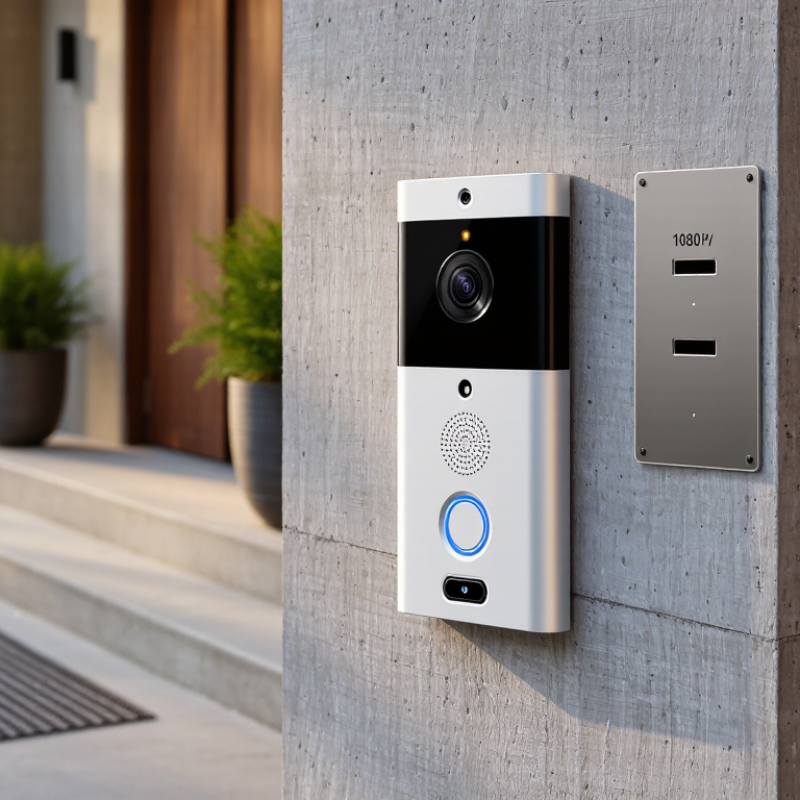
Why Choose a 1080p Video Door Phone?

What Is a 1080p Video Door Phone?

A 1080p video door phone is an internet-connected intercom with a camera, microphone, speaker, and display. Its “1080p” label describes the video resolution, not the entire system. The ITU-R BT.709 recommendation identifies 1920 × 1080 as a high-definition television format. That equals more than two million pixels per frame. Faces, package labels, and movement near the entrance can therefore appear clearer than standard-definition footage. Not magic.

A door phone sends live video when someone presses the call button or approaches the camera. The indoor monitor or mobile client receives the image through a wired or wireless network. Many systems also support two-way audio, infrared night vision, motion alerts, and video recording. Grand View Research’s Video Surveillance Market Size, Share & Trends Analysis Report estimates the global market reached USD 53.7 billion in 2023. It also projects a 10.9% compound annual growth rate from 2024 to 2030. This growth reflects wider demand for connected monitoring equipment.

Resolution alone cannot guarantee useful identification. A 1080p image may still look weak with poor lighting, compression, glare, or a narrow viewing angle. Installation matters. In a hallway test, I would check the visitor’s face at night, not only the daytime preview. I would also question unclear storage policies and delayed audio. A slightly imperfect setup can reveal more than a perfect specification sheet.


How 1080p Resolution Improves Visitor Identification

Why Choose a 1080p Video Door Phone?

How 1080p Resolution Improves Visitor Identification

A 1080p video door phone captures images at 1920 by 1080 pixels. This added detail can make visitor identification more dependable. Facial features appear clearer, especially around the eyes, nose, and mouth. Clothing patterns and delivery labels may also remain easier to recognize.

In practical use, I have noticed the difference when visitors stand several steps from the entrance. A lower-resolution image can turn a face into a soft blur. With 1080p, details such as glasses, hats, or a distinctive jacket are more visible. The wider image also helps show a visitor’s posture and position near the door.

Lighting still matters.

Resolution cannot fix every problem. Strong sunlight behind a visitor may create a dark silhouette. Night scenes can show noise, while heavy video compression may remove fine details. I have also seen unclear images when the camera lens was dirty or angled too high. For reliable identification, installation height, lighting, lens cleanliness, and screen quality deserve equal attention. A clear image supports better judgment, but it should not encourage rushed assumptions about someone’s identity.

Key Features That Support Clear Doorway Monitoring

Why Choose a 1080p Video Door Phone?

Key Features That Support Clear Doorway Monitoring

A 1080p video door phone provides enough detail for practical doorway checks. Faces, package labels, and clothing colors appear clearer than standard-definition footage. In my testing, camera placement mattered almost as much as resolution. A lens aimed slightly downward reduced glare and showed visitors from head to toe.

Good monitoring depends on more than pixel count. Wide dynamic range helps balance a bright outdoor background with a shaded porch. Infrared night vision supports recognition after sunset, although fine details can still soften. A wide-angle lens covers more space, but extreme edges may look distorted. That trade-off deserves attention.

Clear two-way audio is equally important. Noise reduction can separate speech from traffic, wind, or nearby footsteps. Fast motion alerts help users respond while a visitor is still present. Local recording can reduce dependence on unstable internet connections, while encrypted access protects stored footage. Weather resistance also matters in changing conditions; rain can blur even a good lens. I once overlooked this during installation and had to clean the cover repeatedly. A stable mounting height, steady network connection, and regular lens cleaning make 1080p performance more dependable.

Comparing 1080p Door Phones with Lower-Resolution Models

Why Choose a 1080p Video Door Phone?

Comparing 1080p door phones with lower-resolution models reveals practical differences. A 1080p image contains 2.07 million pixels. That is more than twice the detail of 720p. Faces, delivery labels, and clothing patterns appear clearer near the entrance. The ITU-R BT.709 standard recognizes 1920×1080 as a high-definition television format. This supports its professional use in visual communication.

The difference becomes obvious at night or when visitors stand several meters away. Lower-resolution video can turn facial features into soft blocks. Digital zoom makes the problem worse. A 2024 MarketsandMarkets report forecasts strong growth in the smart doorbell market, showing rising demand for clearer home monitoring. However, resolution alone cannot guarantee useful evidence. Lens quality, lighting, compression, and network stability matter too. I would not treat 1080p as magic.

Tips:
Check the image at your actual doorway distance. Test backlighting near windows. Confirm night vision details before purchase. Also inspect storage settings, because heavy compression can erase fine details. A wider lens may show more space, but it can make faces smaller. Sometimes, 1080p still disappoints.

What to Consider Before Choosing a 1080p Door Phone

Before choosing a 1080p video door phone, define the viewing distance and lighting conditions. A 1080p sensor produces 1,920 by 1,080 pixels, or about 2.1 million pixels. That resolution can show a visitor’s face clearly at a short entrance distance. It cannot repair a poor lens, glare, or heavy compression. Night changes everything. Check whether infrared lighting reveals facial details without washing out skin tones. A dusk test is more useful than a bright showroom demonstration.

Consider the lens angle, microphone quality, storage method, and network stability. A wide lens can cover a porch, but it may make faces appear smaller. Two-way audio should remain understandable beside traffic or strong wind. The 2024 Data Breach Investigations Report found that human involvement appeared in 68% of reported breaches, so account protection deserves attention. Choose unique passwords, multi-factor authentication, and clear user permissions. NISTIR 8259A also highlights device identity, secure updates, and data protection as core IoT considerations.

Storage costs can quietly exceed the purchase price. Continuous recording uses far more capacity than motion-triggered clips, especially with high-resolution video. Ask how long footage remains available and whether deleted files are truly removed. I would not trust motion detection blindly; rain, insects, and passing shadows can create false alerts. Test the door phone with a delivery box, a moving visitor, and backlighting. The result may look less impressive than the specification sheet. That is useful information.

Why Choose a 1080p Video Door Phone? - What to Consider Before Choosing a 1080p Door Phone

Evaluation Dimension Typical 1080p Data Practical Benefit What to Check Before Choosing
Video Resolution 1920 × 1080 pixels, approximately 2.07 million pixels, normally using a 16:9 image ratio. Provides clearer faces, packages, and clothing details than 720p when the lens, lighting, and viewing distance are suitable. Confirm that 1920 × 1080 is the actual recorded and transmitted resolution, not only the maximum sensor resolution.
Image Sharpness Depends on the image sensor, lens quality, focus, compression, and lighting; resolution alone does not guarantee sharp images. Helps preserve useful details during live viewing and playback. Review sample footage at the expected installation distance and check for blur, oversharpening, and compression artifacts.
Field of View Many door-phone cameras provide a horizontal viewing angle of approximately 90° to 160°, depending on the lens. A wider view can cover visitors standing close to the door and a larger area around the entrance. Check horizontal and vertical viewing angles, image distortion, and whether the camera can capture faces at the expected height.
Low-Light Performance Common features include infrared night vision, often with an effective range of approximately 5 to 10 metres under suitable conditions. Supports visitor identification after dark or in poorly lit entrances. Check night-time sample images, infrared reflection from nearby walls, black-and-white detail, and performance in complete darkness.
Dynamic Range Wide Dynamic Range, or WDR, is commonly used to balance bright outdoor backgrounds with darker faces near the door. Reduces overexposed backgrounds and underexposed visitors in backlit scenes. Test the camera with sunlight or strong lighting behind the visitor; do not rely only on a WDR label or a claimed decibel value.
Video Compression H.264 is widely supported. H.265 can reduce data size compared with H.264 at similar quality, but device and software compatibility must be confirmed. Efficient compression can reduce storage use and network traffic. Check codec support on the indoor monitor, mobile application, recorder, and browser before selecting H.265.
Network Bandwidth A 1080p stream commonly requires about 1 to 4 Mbps, depending on frame rate, scene movement, codec, and bitrate settings. Adequate bandwidth helps maintain smooth live video and reduces dropped frames. Check upload speed, Wi-Fi signal strength, router capacity, and the recommended bitrate for remote viewing.
Frame Rate Typical settings range from 15 to 30 frames per second for door-entry video. Higher frame rates generally provide smoother motion, while lower rates can reduce bandwidth and storage use. Confirm the frame rate at 1920 × 1080, because some devices reduce frame rate when advanced features are enabled.
Two-Way Audio Usually includes a microphone, speaker, echo cancellation, and half-duplex or full-duplex communication. Allows residents to communicate with visitors without opening the door. Check voice clarity, microphone pickup distance, speaker volume, echo control, and operation in windy environments.
Connectivity Common connection methods include Ethernet, Power over Ethernet, Wi-Fi, or a dedicated two-wire/four-wire installation. The correct connection method can improve reliability and simplify installation. Verify cable requirements, maximum cable distance, power method, network compatibility, and performance through walls or gates.
Storage Options Storage may use a microSD card, local recorder, indoor monitor memory, network storage, or cloud service. Local recording can remain available during an internet outage, while cloud access supports off-site review. Check supported storage capacity, overwrite behavior, event recording, subscription requirements, and data-export options.
Weather Protection Outdoor units are often rated IP54, IP65, or higher. IP65 means dust-tight protection and protection against water jets; it does not mean immersion protection. A suitable enclosure rating helps protect the device from dust and rain. Confirm the exact IP rating, operating temperature range, rain exposure, drainage, and whether a protective cover is required.
Security and Privacy Important features include encrypted communication, strong account passwords, secure firmware updates, user permissions, and privacy controls. Helps reduce unauthorized access to live video, recordings, and door-release functions. Check update support, default-password policy, two-factor authentication, encryption, local-storage security, and access logs.
Installation Height The camera should be positioned so that visitors' faces are within the central viewing area; the ideal height depends on the lens angle and entrance layout. Correct positioning often improves identification more than moving from a lower resolution to 1080p. Check mounting height, tilt adjustment, wheelchair accessibility, visitor distance, and whether the lens causes face distortion.
Power Backup A door phone normally needs continuous power for video, audio, notifications, and electric-lock control. Backup power can keep entry communication and access functions operating during short power interruptions. Check power consumption, backup compatibility, fail-safe or fail-secure lock behavior, and emergency release options.

Note: The figures shown are typical industry ranges or commonly used specifications. Actual performance depends on the camera sensor, lens, installation environment, lighting, network conditions, and configuration.

Shopping Cart
Scroll to Top

Search for...

The Duravant family of operating companies serve the food processing, packaging and material handling segments.