What Is the Food Processing Equipment Industry?
The Food Processing Equipment Industry supports the systems that turn raw ingredients into safe, consistent, and marketable foods. It includes machines for washing, cutting, mixing, cooking, cooling, filling, sealing, and packaging. These systems appear in small bakeries, beverage plants, meat facilities, and large automated factories.
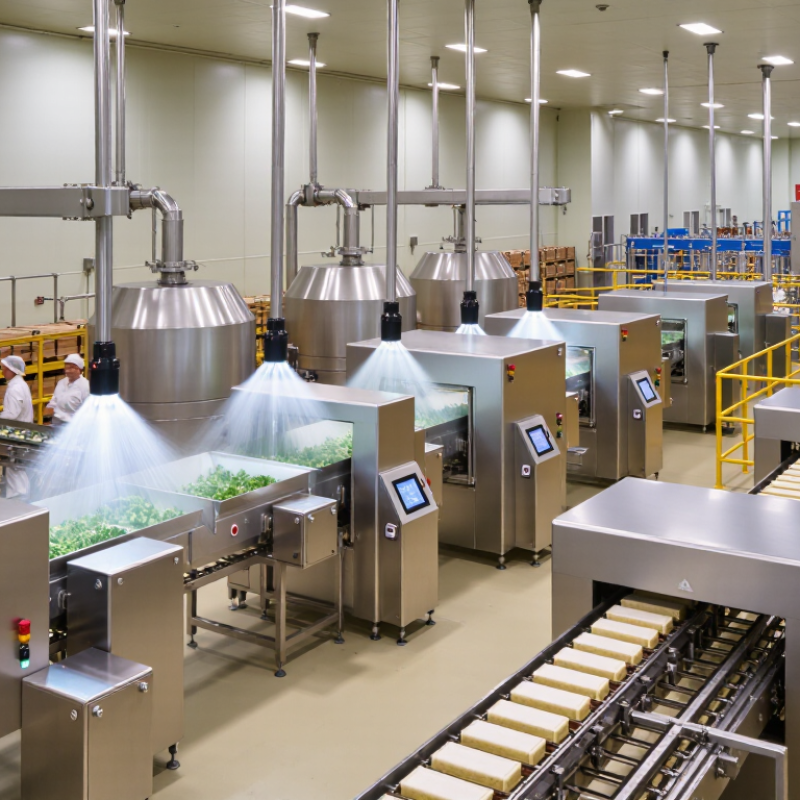
In a working plant, equipment must do more than perform a single task. It must control temperature, limit contamination risks, reduce waste, and maintain reliable production speeds. Stainless steel conveyors may carry vegetables through rinsing stations. Sensors can monitor cooking temperatures, while filling machines measure each container with surprising precision. Engineers also consider cleanability, energy use, operator safety, maintenance access, and product quality.
However, no machine is perfect.
A strong introduction to this industry should examine both technology and practical performance. Product brochures often highlight speed, but daily results depend on installation, training, sanitation routines, and preventive maintenance. A high-capacity mixer may appear efficient, yet poor calibration can create uneven batches. Even advanced equipment can struggle when facilities lack skilled technicians or clear operating procedures.
This article explores how the industry works, which equipment categories matter, and why manufacturers choose specific systems. It also considers automation, sustainable design, data monitoring, and changing consumer expectations. Reliable decisions require more than impressive specifications. They require evidence from testing, experienced operators, documented maintenance, and measurable results. Some choices remain difficult, especially when businesses balance cost, flexibility, hygiene, and long-term reliability. That tension deserves honest attention.
Industry Definition: Processing, Preservation, Packaging, and Automation
What Is the Food Processing Equipment Industry?
Industry Definition: Processing, Preservation, Packaging, and Automation
The food processing equipment industry supplies machines that turn raw ingredients into safe, consistent products. Typical equipment includes mixers, cutters, heat exchangers, pumps, conveyors, and filling systems. Each machine must match the product’s texture, temperature, moisture, and production volume. A thick sauce may require gentle pumping, while frozen vegetables need rapid cooling and controlled storage.
Preservation equipment helps slow spoilage and protect quality. Common methods include heating, chilling, freezing, drying, and controlled atmosphere storage. Operators monitor time, temperature, pressure, and hygiene conditions throughout production. Small measurement errors can affect taste, shelf life, and safety. Stainless steel surfaces also support practical cleaning and maintenance in demanding work areas.
Packaging equipment portions, seals, labels, and protects finished food. Reliable sealing reduces leaks and limits exposure to air or moisture. Automation connects sensors, control systems, conveyors, and inspection devices. It can improve repeatability and reduce manual handling, but automation is not automatically better. Poorly calibrated sensors may repeat the same mistake faster. Experienced technicians still inspect equipment, review production data, and respond to unusual noise, vibration, or temperature changes. A modern line can be efficient, yet real performance depends on training, sanitation, maintenance, and thoughtful process design. Some facilities discover this only after installation.
Market Scale: Global Equipment Revenue Reached USD 58.7 Billion in 2023
What Is the Food Processing Equipment Industry?
Market Scale: Global Equipment Revenue Reached USD 58.7 Billion in 2023
The food processing equipment industry supplies machines that transform raw ingredients into safe, consistent products. Its scope includes washing, cutting, mixing, heating, drying, filling, inspection, and packaging systems. Equipment must handle real factory pressures: sticky dough, corrosive sauces, heavy production shifts, and strict cleaning schedules.
A 2024 global market assessment reported that equipment revenue reached USD 58.7 billion in 2023. The estimate covers processing machinery across meat, dairy, bakery, beverages, frozen foods, and packaged products. Its scale reflects continuous investment in automation, hygiene controls, energy efficiency, and production capacity. Still, market definitions differ. Some studies include packaging machinery, while others measure only core processing systems.
The FAO Food Outlook 2023 recorded strong global demand for food commodities, supporting long-term equipment investment. UNIDO industrial statistics also show how manufacturing upgrades depend on productivity and resource efficiency. In practice, a modern line may combine stainless-steel conveyors, temperature sensors, automated dosing, and digital quality checks. Small factories often need flexible machines, not maximum speed. Large facilities usually prioritize uptime, sanitation, and data traceability.
The USD 58.7 billion figure should not be treated as perfectly precise. Exchange rates, replacement sales, and regional reporting gaps can change the result. That weakness matters when comparing reports. A machine may look efficient on paper but consume more water during cleaning or require costly specialist maintenance.
Core Equipment Segments: Thermal, Mechanical, Separation, and Filling Systems
What Is the Food Processing Equipment Industry?
Core Equipment Segments: Thermal, Mechanical, Separation, and Filling Systems
The food processing equipment industry supplies machines that turn raw ingredients into safe, consistent products. It supports preparation, cooking, handling, packaging, and quality control. In a working plant, equipment must manage heat, pressure, moisture, speed, and hygiene at the same time. Small design choices can affect texture, energy use, cleaning time, and product loss.
Thermal systems include ovens, cookers, pasteurizers, and cooling units. They control temperature carefully to improve safety and preserve product quality. Mechanical equipment performs cutting, mixing, grinding, conveying, and forming. A mixer with uneven movement may leave dry pockets or damaged ingredients. That problem is easy to miss during a short trial.
Separation systems remove unwanted materials or divide products by size, density, or moisture. Screens, filters, centrifuges, and separators each require suitable operating conditions. Filling systems then measure and place products into containers with controlled speed and accuracy. Cleanable surfaces, reliable sensors, and accessible maintenance points matter across every segment. Operators also need practical training, not only technical manuals. No line is perfect. A machine may meet its specification but still perform poorly when ingredients change. Experienced teams review actual production data, inspect wear points, and adjust settings before accepting a final design. This careful approach supports safer processing and more dependable output.
Food Safety Drivers: WHO Estimates 600 Million Foodborne Illness Cases Yearly
Food processing equipment is more than a collection of mixers, conveyors, fillers, and thermal systems. It is a control layer between raw materials and consumers. The World Health Organization estimates that nearly 600 million people suffer foodborne illness each year, with about 420,000 deaths. These figures come from the WHO Estimates of the Global Burden of Foodborne Diseases report, published in 2015.
This risk makes hygienic equipment design a production requirement, not a decorative feature. Smooth contact surfaces, accessible cleaning points, controlled temperatures, and reliable drainage can reduce areas where pathogens hide. The Codex Alimentarius General Principles of Food Hygiene, revised in 2022, emphasizes hazard analysis, sanitation, and preventive controls throughout processing. Sensors also help operators track temperature, pressure, moisture, and cleaning cycles. Small deviations matter.
Data is never perfect.
The WHO estimate combines evidence from many countries, and surveillance quality differs widely. Some illnesses are never reported or clinically confirmed. That limitation should encourage better monitoring, not weaker controls. Equipment planners should connect machine records with laboratory testing, sanitation logs, and worker observations. A fast line can still be an unsafe line. In practice, maintenance teams may discover worn seals, trapped food particles, or inaccurate sensors before a formal audit does. Those details are easy to underestimate, yet they can influence exposure risk and equipment reliability.
The World Health Organization estimates that contaminated food causes approximately 600 million illnesses and 420,000 deaths worldwide each year. Children under five account for about 125,000 of these deaths, highlighting the importance of hygienic food processing, contamination control, and food safety monitoring.