

Top Vibratory Dryer Manufacturers for Global Buyers
Top Vibratory Dryer Manufacturers for Global Buyers begins with a practical question: what performance can buyers verify? A Vibratory Dryer must move material evenly, remove moisture consistently, and protect product quality. Its value is not proven by polished brochures alone. It appears in residence-time data, moisture curves, energy records, and service response.
Grand View Research’s Industrial Dryers Market report identifies food, chemical, and pharmaceutical processing as important demand sectors. MarketsandMarkets’ Drying Equipment Market research also highlights automation, energy efficiency, and process control. These trends matter because drying often combines heat, airflow, vibration, and strict hygiene requirements. The U.S. Department of Energy’s process-heating guidance further encourages manufacturers to reduce thermal losses and improve operating efficiency. Exact savings still depend on the material, starting moisture, and plant layout.
Professor Arun S. Mujumdar, editor of Handbook of Industrial Drying, describes drying as “perhaps the oldest, most common, and most diverse of chemical engineering unit operations.” His observation remains relevant. Modern vibratory systems must handle powders, granules, crystals, and fragile products without creating excessive dust or degradation. The difficult truth is that no manufacturer leads in every application. One supplier may offer excellent throughput, while another provides stronger commissioning support.
This guide compares leading Vibratory Dryer manufacturers through measurable criteria. These include thermal efficiency, residence-time control, hygienic design, vibration stability, spare-parts access, and global technical support. Buyers should request application trials. A specification sheet cannot reveal every scaling problem. Even experienced teams can overlook maintenance access, which later becomes an expensive weakness.
What Is a Vibratory Dryer and How Does It Work?
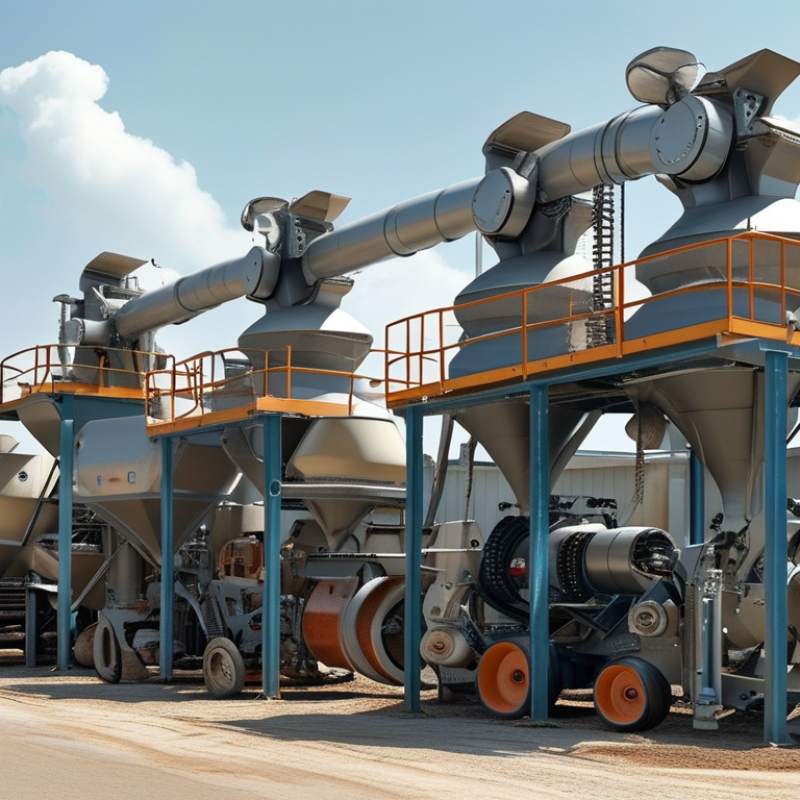
A vibratory dryer removes moisture by combining controlled heat, airflow, and mechanical vibration. Wet solids enter a perforated processing deck, where vibration spreads particles into a shallow, moving layer. Heated air passes through that layer and carries moisture away. The deck’s gentle movement also prevents stagnant zones and improves contact between air and material.
The process is continuous. Feed rate, vibration amplitude, air temperature, and residence time must stay balanced. Excessive heat can damage powders, crystals, food ingredients, or sensitive chemicals. Low airflow leaves wet pockets. The theory is tidy; production is not. A first-pass calculation can mislead when particle size changes.
The IEA’s Energy Efficiency 2023 report identifies industry as responsible for roughly 37% of global final energy use, making thermal efficiency a serious purchasing concern. The U.S. Department of Energy’s Industrial Decarbonization Roadmap also places process heating among the largest industrial energy challenges. For global buyers, a vibratory dryer should therefore be judged by measured evaporation capacity, outlet moisture variation, and energy use per kilogram of removed water.
Independent trials matter. Ask for operating data using your actual feedstock, because laboratory results may not represent sticky or irregular particles. Check cleanability, enclosure design, temperature control, and maintenance access. Small details count. A dryer that saves energy but creates frequent blockages may perform poorly in real production. Manufacturers should provide test methods, material balances, and clear operating limits rather than relying on attractive capacity claims.
Key Features to Compare in Vibratory Dryer Manufacturers
When comparing vibratory dryer manufacturers, inspect drying performance before reviewing prices. Ask for feed moisture, target residual moisture, throughput, and residence time data. Reliable manufacturers explain how vibration amplitude, frequency, airflow, and heat affect each result. Request test records using material similar to yours. A laboratory trial can reveal sticking, uneven drying, or dust escape. Look for product-contact surfaces with documented material grades and cleanable welds. This detail matters in demanding production rooms.
Tips: Compare the controls, not only the machine frame. A practical system should show temperature, vibration settings, airflow, alarms, and batch history. Check whether operators can adjust recipes without complicated menus. Ask for calibration routines and service response times. Request a spare-parts list with expected replacement intervals. Small omissions become expensive later.
Manufacturer credibility depends on evidence, not confident sales language. Review commissioning procedures, operator training, safety documentation, and references from comparable applications. Independent inspection options can strengthen acceptance decisions. Compare energy use under the same moisture load, not ideal conditions. Some quotations omit installation, exhaust treatment, or control integration. That makes comparison misleading. No supplier will fit every process perfectly. A manufacturer willing to discuss limitations may be more dependable than one promising effortless performance.
Leading Vibratory Dryer Manufacturers for Global Buyers
Global buyers increasingly assess vibratory dryer manufacturers through measurable performance, not catalog claims. MarketsandMarkets reports continued growth in industrial drying equipment, driven by food, chemical, pharmaceutical, and mineral processing. Energy use remains a major concern. The International Energy Agency identifies industrial heat as a significant source of global energy demand.
Experienced manufacturers should provide drying trials, residence-time data, moisture curves, and particle-handling evidence. A reliable supplier will explain how vibration frequency, bed depth, airflow, and temperature affect final moisture. Stainless-steel contact surfaces, cleanable designs, and documented safety controls also matter. Small details often decide whether equipment performs consistently.
Capacity alone can mislead. A machine rated for ten tonnes per hour may achieve less with sticky or uneven feed. Ask for test results using material similar to yours. Request references from comparable production environments. It is a practical step, though many buyers skip it.
Tips: Compare energy use per tonne, not motor size. Check spare-part availability near your plant. Confirm local electrical standards before ordering. Review dust-control requirements with an independent engineer. Reports from the U.S. Department of Energy repeatedly emphasize efficiency measurement, but real operating conditions can change the result. Leave room for uncertainty. A perfect forecast is rarely realistic.
How to Evaluate Quality, Capacity, and Energy Efficiency
When comparing vibratory dryer manufacturers, global buyers should test performance, not trust nameplate capacity. Capacity changes with bulk density, inlet moisture, particle size, and residence time. Request a factory trial using your material. Measure final moisture variation, throughput, temperature stability, and vibration amplitude. A dryer producing 1,000 kilograms per hour may fail if its outlet moisture fluctuates by several percentage points. That detail matters.
Energy efficiency deserves equal attention. The International Energy Agency’s Energy Efficiency 2023 report places industry at about 37% of global final energy demand. Drying can therefore influence operating costs significantly. Compare kilowatt-hours per kilogram of water removed, not only motor power. Check insulation thickness, heat recovery, airflow control, and variable-frequency drives. The U.S. Department of Energy’s process-heating guidance also encourages measuring actual thermal performance rather than relying on rated efficiency. Small leaks and poorly controlled exhaust air can quietly waste heat.
Quality inspection should include weld finish, screen durability, bearing protection, and access for cleaning. Ask for vibration-fatigue records and documented performance under continuous operation. ISO certification is useful, but it does not prove drying results. I would request three references from similar materials and a witnessed acceptance test. Catalogue figures can flatter reality. That is worth challenging.
Top Vibratory Dryer Manufacturers for Global Buyers - How to Evaluate Quality, Capacity, and Energy Efficiency
| Evaluation Dimension | Practical Benchmark or Reference Range | Evidence to Request from the Manufacturer | Why It Matters to Global Buyers | Preferred Assessment | Buyer Check |
|---|---|---|---|---|---|
| Drying Capacity | Confirm both wet-feed and dry-product capacity. A quoted throughput without feed moisture, discharge moisture, material density, and residence time is not comparable. | Written capacity statement showing feed rate, inlet moisture, target outlet moisture, bulk density, particle-size distribution, and operating temperature. | Dryer capacity is governed by evaporative load and material behavior, not only by the machine's nominal dimensions. | Comparable Data | Compare suppliers using the same process conditions. |
| Moisture-Removal Performance | Require a guaranteed outlet-moisture range and define the permitted moisture variation across the product stream. | Factory test report, representative sample test, moisture measurement method, and documented acceptance criteria. | Consistent final moisture helps protect product quality, storage stability, and downstream processing. | Critical | Specify test method and sampling frequency in the contract. |
| Energy Efficiency | Evaluate specific energy consumption in kWh per tonne of water evaporated, rather than using only motor power or installed heating capacity. | Energy balance covering electrical power, thermal input, exhaust losses, air volume, inlet and outlet temperatures, and evaporation rate. | Specific energy consumption allows fair comparison between different dryer sizes, heating systems, and operating conditions. | Critical | Request measured data from a test using material similar to yours. |
| Vibration System | Adjustable vibration frequency and amplitude should be matched to material flow, bed depth, and residence-time requirements. | Operating envelope, vibration-isolation design, bearing specifications, lubrication schedule, and dynamic-load calculations. | Correct vibration control supports uniform conveying and reduces excessive mechanical stress, noise, and product breakage. | Technical Review | Verify settings under actual production load, not only at no-load conditions. |
| Temperature Control | Independent control of process-air temperature, product temperature, and exhaust temperature is preferable for heat-sensitive products. | Control-loop diagram, sensor accuracy, alarm limits, response time, and calibration certificates. | Stable temperature control reduces overheating risk and improves repeatability between production batches. | Critical | Confirm product-temperature limits and control accuracy in the specification. |
| Airflow and Heat Recovery | Assess recirculation, exhaust control, insulation, and heat-recovery options. Heat recovery should be evaluated using measured thermal savings. | Airflow diagram, fan curve, duct-pressure calculations, insulation specifications, and estimated or measured heat-recovery performance. | Air management often has a larger effect on operating cost than the vibratory drive alone. | Efficiency Review | Check whether stated savings include fan power and cleaning losses. |
| Product Quality and Handling | Product-contact surfaces should be compatible with the material, cleaning method, temperature, and corrosion environment. | Material certificates, surface-finish specification, weld-quality records, seals, gaskets, and cleanability details. | Suitable construction reduces contamination, corrosion, wear, and unplanned sanitation downtime. | Critical | Define surface finish and material requirements before quotation. |
| Safety and Compliance | Electrical and mechanical safeguards should align with the destination country's regulations and the site's risk assessment. | Risk assessment, guarding details, emergency-stop layout, electrical schematics, conformity documentation, and applicable test records. | Compliance affects import approval, installation acceptance, operator safety, and insurance requirements. | Mandatory | Confirm local voltage, frequency, enclosure rating, and documentation language. |
| Reliability and Maintainability | Look for accessible wear parts, condition-monitoring provisions, defined preventive-maintenance intervals, and documented spare-parts availability. | Bill of critical spare parts, maintenance manual, bearing-life calculations, recommended inspection intervals, and service response terms. | Maintainability directly influences uptime and the total cost of ownership over the equipment life. | Lifecycle Value | Price critical spares and service travel before placing the order. |
| Testing and Acceptance | Use a documented factory acceptance test and, where practical, a site acceptance test based on agreed process conditions. | Test protocol covering throughput, final moisture, energy input, vibration, noise, temperature, and safety functions. | Performance guarantees are meaningful only when measurement methods and operating conditions are clearly defined. | Mandatory | Link final payment and warranty conditions to agreed acceptance criteria. |
| Total Cost of Ownership | Compare purchase price, installation, utilities, labor, maintenance, consumables, downtime, and expected service life. | Five- to ten-year operating-cost model using transparent assumptions for energy price, annual hours, maintenance, and production volume. | A lower initial price can result in higher long-term costs if energy use, maintenance, or downtime is excessive. | Financial Review | Use the same production schedule and energy prices for every quotation. |
Reference values are evaluation guidelines rather than performance claims for any specific manufacturer. Actual capacity, moisture removal, energy consumption, and product quality depend on material properties, feed conditions, operating temperature, airflow, residence time, and site conditions.
Export, Compliance, Installation, and After-Sales Considerations
Global buyers should evaluate vibratory dryer manufacturers beyond purchase price. Export readiness matters when equipment crosses borders. Request the HS code, country of origin, commercial invoice, packing list, and installation drawings. The World Bank’s Logistics Performance Index 2023 shows that customs efficiency and shipment reliability vary sharply between markets. That difference can affect production schedules. Ask for moisture-performance data using your actual material, not only laboratory samples.
Compliance must match the destination. Confirm electrical ratings, guarding, emergency stops, pressure limits, and technical files before ordering. The EU Machinery Regulation 2023/1230 will apply from January 20, 2027, so future European shipments need early planning. IEC 60204-1 can guide electrical safety documentation. Energy use deserves equal attention. The IEA’s Energy Efficiency 2023 report identifies industry as responsible for about 37% of global final energy demand. A dryer with poor insulation may become an expensive asset.
Tips: Ask for a factory acceptance test, spare-parts list, remote commissioning plan, and response-time commitment. Specify who pays for travel and local integration. After-sales support should include operator training, troubleshooting videos, and scheduled maintenance intervals. Require written guarantees for drying capacity and final moisture content. Small details matter. I have seen projects underestimate local voltage differences and floor access. That mistake is avoidable, but supplier assumptions can still create delays. Select a manufacturer willing to document limits, exceptions, and corrective actions clearly.