How to Choose an IML Container Manufacturer in 2026?

Choosing the right Iml Container Manufacturer in 2026 requires more than comparing unit prices. Packaging buyers must examine production evidence, material expertise, quality controls, and long-term service capacity. The MarketsandMarkets In-Mold Labeling Market report forecasts continued growth through 2030, driven by demand for lightweight, decorated, and recyclable packaging. That growth creates opportunity, but also increases supplier differences.

Look for a manufacturer that can explain its process clearly. Ask about injection-molding machines, label placement accuracy, cycle times, and defect rates. A reliable supplier should provide recent audit records, material specifications, and traceable batch documentation. For food, cosmetic, or household applications, request relevant food-contact declarations and testing records. Packaging compliance cannot be treated as a sales promise.

Practical details matter.

Inspect sample containers under real conditions. Fill one, stack another, and check label alignment after transport simulation. Ask whether the same resin and label structure will be used during mass production. The Ellen MacArthur Foundation and major packaging industry reports continue to emphasize design for recycling, material reduction, and circular systems. Therefore, confirm whether the container supports your regional recycling goals rather than assuming “recyclable” means universally accepted.

The cheapest quote can look attractive. It can also become expensive. A supplier with strong engineering support may prevent leaks, warped walls, color variation, and missed delivery windows. Still, no manufacturer is perfect. Review weaknesses openly, test claims independently, and compare total cost over the product’s complete lifecycle. That disciplined approach helps identify an Iml Container Manufacturer capable of delivering consistent performance in 2026.

How to Choose an IML Container Manufacturer in 2026?

Define Your IML Container Requirements

How to Choose an IML Container Manufacturer in 2026?

Before contacting an IML container manufacturer, define the container’s job. Record the product type, fill volume, density, and filling temperature. A 500-milliliter container may need different wall strength than expected. Measure twice.

Describe the shape precisely. Include neck dimensions, closure type, label area, grip zones, and stacking limits. Decide whether the container needs barrier protection against moisture, oxygen, light, or aroma loss. Confirm the intended resin and its food-contact or product-contact requirements. These details help manufacturers propose suitable molds, materials, and in-mold labeling processes. A clean label is not enough. It must also survive filling, transport, storage, and handling.

Set measurable performance targets before requesting quotations. Specify drop height, compression load, leak resistance, color tolerance, label alignment, and acceptable defect rates. Ask for sample containers, test reports, material traceability, and production records. Experienced teams should explain how they verify each requirement, not simply promise quality. They should also identify limits, such as difficult corners or uneven label surfaces. I have seen projects fail because decoration received more attention than sealing performance. That is an expensive lesson. Leave room for revision after pilot testing. Real containers can behave differently from drawings. Ask how tooling changes, inspection data, minimum order quantities, and delivery schedules affect the final cost.

Compare Manufacturing Capabilities and Product Quality

How to Choose an IML Container Manufacturer in 2026?

Compare Manufacturing Capabilities and Product Quality

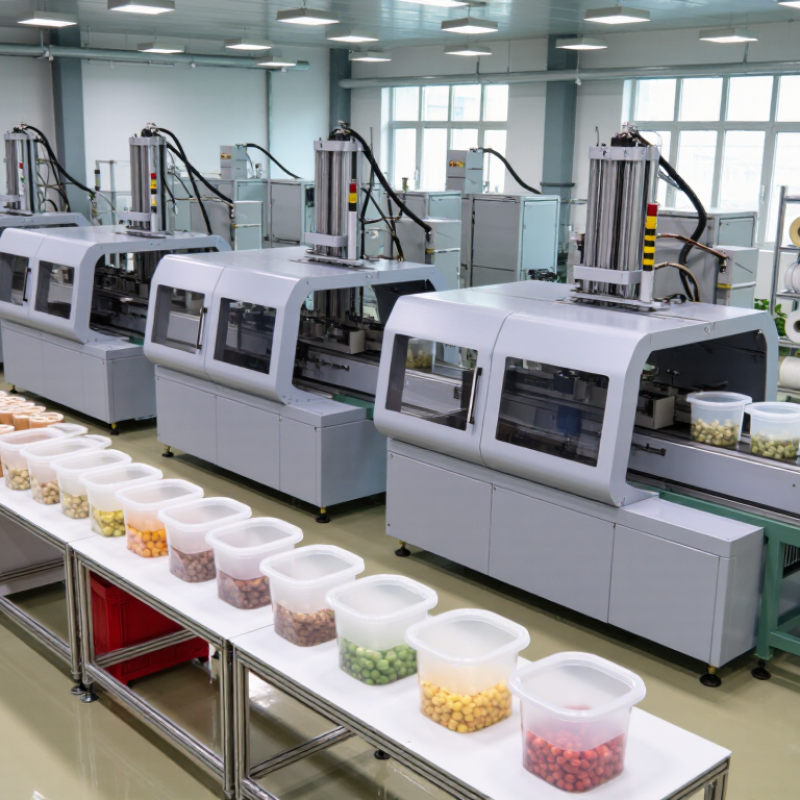
The right IML container manufacturer should prove capability on your actual production conditions. Ask for line speed, cavity count, label placement tolerance, and verified reject rates. A factory may show a beautiful sample, yet struggle with thin-wall parts or complex curves. That gap matters.

Smithers’ The Future of Global Packaging to 2028 estimates the global packaging market will grow from about 1.17 trillion dollars in 2023 to 1.38 trillion dollars by 2028. Higher volumes increase pressure on consistency, automation, and waste control. Compare manufacturers using measured data, not attractive brochures. Request dimensional inspection records, color measurements, seal performance, and batch traceability. Testing should include drop resistance, stacking pressure, label adhesion, and heat exposure.

Material control deserves equal attention. Plastics Europe reported 430.9 million tonnes of global plastics production in 2023. This scale makes resin selection and process discipline increasingly important. Check whether the supplier controls drying, blending, mold temperature, and label storage. ISO 9001 certification supports reliability, but it does not replace process evidence. A certificate alone is not enough.

I would also examine pilot-run behavior. Does the supplier record start-up waste and mold adjustments? Can it explain a failed batch without hiding details? Perfect data can look suspicious. Real production has variation. The stronger manufacturer measures it, investigates it, and improves the next run.

Verify Materials, Compliance, and Sustainability Standards

How to Choose an IML Container Manufacturer in 2026?

Material verification should start with the resin, not the sales brochure. Ask for polymer specifications, batch records, food-contact declarations, and migration-test results. The test conditions should match your product, filling temperature, and storage time. For recycled content, request mass-balance evidence or third-party chain-of-custody records. A vague “eco-friendly” label proves little.

The OECD Global Plastics Outlook reported 353 million tonnes of plastic waste in 2019, while only 9% was recycled. This makes design decisions commercially important. Select containers and labels with compatible polymers, clear sorting instructions, and documented recyclability testing. Check whether inks, adhesives, and barrier layers affect recovery. Small details matter. They often do.

Compliance should include traceability, change-control procedures, and supplier audits. Ask how the manufacturer handles resin substitutions, production defects, and corrective actions. Relevant evidence may include ISO 9001 systems, ISO 14001 practices, and applicable food-contact or packaging requirements in your sales markets. The UNEP report Turning off the Tap states that plastic pollution could be reduced by 80% by 2040 through reuse, recycling, and redesign. Still, sustainability claims can be overstated. A container may use less material but remain difficult to recycle. A certificate can also become outdated. Verify current documents, inspect production samples, and record every assumption before approval.

How to Choose an IML Container Manufacturer in 2026? - Verify Materials, Compliance, and Sustainability Standards
Evaluation Dimension What to Verify Relevant Standard or Regulation Practical Acceptance Criteria Required Evidence Priority
Resin Identification Confirm the exact polymer, additives, colorants, fillers, and barrier layers used in the container and in-mold label. ISO 11469; ASTM D7611/D7611M; applicable local packaging rules Material composition is documented, consistent between production lots, and suitable for the intended application and recycling stream. Technical data sheet, bill of materials, resin declarations, and representative sample testing Critical
Food-Contact Safety Check whether the container, label, inks, adhesives, and processing aids are suitable for the intended food type, temperature, and contact duration. Applicable food-contact legislation in the target market, such as EU Framework Regulation (EC) No. 1935/2004 and relevant U.S. food-contact requirements All food-contact components have current compliance declarations and migration testing for the intended use conditions. Declaration of compliance, overall and specific migration reports, formulation controls, and change-control records Critical
Chemical and Restricted-Substance Control Review controls for heavy metals, intentionally added PFAS, substances of very high concern, mineral-oil hydrocarbons, and other restricted chemicals. REACH; applicable packaging heavy-metal limits; market-specific chemical restrictions No restricted substance exceeds the legal limit, and intentionally added substances are disclosed and approved before use. Supplier declarations, analytical screening, chemical inventory, and signed restricted-substance policy Critical
Recycled Content Verification Determine whether post-consumer or post-industrial recycled material is used, and verify how the claimed percentage is calculated. ISO 14021 for self-declared environmental claims; applicable recycled-content legislation Recycled content is measured using a defined mass-balance or physical-separation method, with exclusions and calculation boundaries clearly stated. Mass-balance calculation, input-output records, supplier certificates, and independent chain-of-custody audit where applicable High
Recyclability of the Complete Pack Assess the container, label, ink, adhesive, cap, sleeve, and decoration as one packaging system rather than evaluating the container alone. ISO 18604; EN 13430; applicable design-for-recycling guidance and local collection requirements The complete pack is compatible with the target recycling stream and does not create unacceptable sorting, washing, or reprocessing problems. Design-for-recycling assessment, sorting or recycling trial, material compatibility data, and end-market confirmation Critical
In-Mold Label Compatibility Verify label material, ink, coating, adhesive behavior, registration accuracy, heat resistance, and interaction with the container resin. Customer specification; applicable food-contact and recycling requirements Labels remain securely bonded, maintain legibility, and do not interfere with recycling identification or reprocessing. Production trial report, peel or adhesion results, print migration data where relevant, and approved artwork specification High
Quality Management System Evaluate process control, traceability, nonconformance handling, corrective action, calibration, and supplier management. ISO 9001:2015 or an equivalent independently audited quality system Critical dimensions and performance characteristics have documented specifications, statistical controls, and lot-level traceability. Current certificate, audit report, control plan, inspection records, and corrective-action history High
Hygiene and Manufacturing Controls Review hygiene zoning, foreign-material prevention, pest control, personnel practices, cleaning, and contamination controls. Applicable good manufacturing practice requirements; ISO 22000 or an equivalent food-safety system where appropriate Hygiene risks are assessed, controlled, recorded, and verified through routine inspections and documented corrective actions. Hygiene risk assessment, sanitation records, environmental monitoring where applicable, and audit results Critical
Dimensional and Functional Performance Check wall thickness, weight, capacity, sealing surface, stackability, drop resistance, leak resistance, and thermal performance. Agreed product specification; relevant ASTM, ISO, or EN test methods Samples meet approved tolerances and pass application-specific tests under expected filling, transport, storage, and use conditions. First-article inspection, capability studies, drop and leak tests, dimensional reports, and retained samples High
Environmental Management Confirm control of energy, water, waste, emissions, hazardous materials, and environmental incidents at the manufacturing site. ISO 14001:2015 Environmental aspects are identified, legal obligations are monitored, objectives are measurable, and performance is reviewed at defined intervals. Valid certificate, environmental objectives, utility records, waste manifests, permits, and audit findings High
Carbon and Energy Data Request product-level greenhouse-gas information and determine whether energy and emissions data include defined boundaries and assumptions. ISO 14067; GHG Protocol Product Standard; ISO 50001 for energy management Carbon data identifies the functional unit, system boundary, emission factors, allocation method, data period, and verification status. Product carbon footprint, energy baseline, emissions calculations, verification statement, and improvement plan High
Packaging-Regulation Readiness Assess readiness for market-specific requirements covering packaging minimization, recyclability, labeling, recycled content, and producer reporting. Applicable national packaging laws; EU Packaging and Packaging Waste Regulation (EU) 2025/40 where relevant The manufacturer can provide required technical data and support compliance documentation for the destination market and 2026 implementation requirements. Regulatory gap assessment, packaging data sheet, recyclability evidence, and documented compliance responsibilities Critical
Traceability and Change Control Verify traceability from resin and label inputs through molding, inspection, packing, and shipment, including notification of material or process changes. ISO 9001; applicable food-safety and customer-specific requirements Each lot can be traced to key raw materials, production records, operators or equipment, inspection results, and shipment documentation. Lot records, barcode or batch system, mock recall results, change-control procedure, and notification timeline Critical
Supply Continuity and Capacity Review production capacity, tooling redundancy, resin sourcing, maintenance strategy, lead times, and contingency planning. Customer continuity requirements; business continuity best practices Capacity is demonstrated using realistic demand forecasts, approved backup plans, safety-stock rules, and recovery targets for major disruptions. Capacity model, business continuity plan, maintenance schedule, supplier-risk assessment, and on-time delivery history High
Independent Verification Distinguish certified claims from self-declared claims and confirm the scope, validity, issuing body, and expiration date of each certificate. ISO/IEC 17021-1 for management-system certification bodies; ISO 14065 for greenhouse-gas validation and verification bodies Certificates cover the relevant site, process, product, and claim; expired, partial-scope, or unverifiable certificates are not accepted as sufficient evidence. Certificate register, accreditation details, audit scope, verification statement, and latest corrective-action closure High

Evaluate Tooling, Lead Times, Pricing, and Production Capacity

How to Choose an IML Container Manufacturer in 2026?

Tooling, lead time, pricing, and capacity deserve equal scrutiny. Tooling is not merely a mold invoice. Ask about cavity count, steel grade, maintenance intervals, and ownership rights. A cheaper mold may create flash, label distortion, or longer press cycles. These defects quietly increase unit costs. Smithers’ packaging outlook reports continued growth in rigid plastic packaging, increasing pressure on efficient, repeatable production. Request recent tooling trials, dimensional records, and sample containers from comparable projects.

Lead times should include design approval, mold fabrication, sampling, label testing, and ramp-up. A supplier promising eight weeks may exclude critical stages. During audits, buyers should compare a written production schedule against actual delivery records. Pricing must show resin, label material, machine time, tooling amortization, inspection, freight, and scrap assumptions. PMMI’s 2024 State of the Industry reporting highlights ongoing cost pressure across packaging machinery and manufacturing operations. That makes transparent quotations more valuable than impressive discounts.

Tips: Ask for capacity by machine size, not only annual output. Check available hours, backup equipment, and planned maintenance. Confirm whether peak-season orders receive the same service level. A useful test is a small pilot run with production-grade labels and resin. It may reveal problems earlier. Do not overestimate forecasts; demand plans are often optimistic. Also, calculate the cost of delayed launch, not just the quoted container price.

Assess Customer Support and Long-Term Partnership Potential

When choosing an IML container manufacturer in 2026, customer support deserves the same attention as machinery and pricing. A capable supplier should answer technical questions clearly and within an agreed timeframe. Ask how they handle artwork changes, material trials, color variation, and urgent production issues. Request sample support records, not only sales promises.

Look for a structured service process. Can you reach a trained engineer directly? Does the manufacturer provide installation guidance, process settings, inspection standards, and spare-part information? During a factory visit, observe how employees record problems. A clean ticketing system and clear escalation path often reveal stronger reliability than polished presentations. Small details matter. Response speed matters.

Long-term partnership potential also requires honest communication about limitations. A supplier that admits a mold may need revision can prevent expensive delays later. Discuss capacity planning, quality audits, maintenance training, and backup arrangements before signing an agreement. Confirm who owns technical documents and how changes are approved. In practical sourcing work, I have seen teams focus heavily on the first shipment and overlook after-sales support. That mistake can create months of friction. Still, support quality may change after the contract begins, so schedule quarterly reviews and track measurable indicators, such as response time, repeat defects, corrective-action closure, and delivery consistency. Trust should be tested gradually, not assumed.

Shopping Cart
Scroll to Top

Search for...

The Duravant family of operating companies serve the food processing, packaging and material handling segments.