

Top Pet Food Processing Equipment for Global Buyers
Choosing the right Pet Food Processing Equipment can shape product quality, operating costs, and production reliability. Global buyers must assess more than machine price. They need to examine capacity, raw material handling, sanitation, energy use, automation, and after-sales support. A cooker may process meat efficiently, yet perform poorly with high-moisture formulas or sensitive nutrients. Small details matter. Think of uneven kibble size, difficult-to-clean corners, or steam escaping around a worn seal.
This guide introduces practical equipment options for modern pet food plants. It considers grinders, mixers, extruders, dryers, coating systems, coolers, and packaging machines. Each section connects equipment functions with real production needs. Buyers can compare stainless steel construction, control systems, maintenance access, and spare-part availability. Supplier documentation also deserves careful review, including testing records, installation guidance, and hygiene procedures. Regional requirements may differ, so professional technical and regulatory advice remains important.
No single machine fits every factory. That is easy to forget. A growing producer may value flexible batch sizes, while a large facility may prioritize continuous output. Experienced teams should test materials before signing a purchase agreement. They should also inspect cleaning time, noise levels, operator safety, and trial-run results. Even reliable equipment can underperform when poorly installed or rushed into production. This overview aims to support informed decisions with practical comparisons, measurable criteria, and a realistic view of equipment limitations.
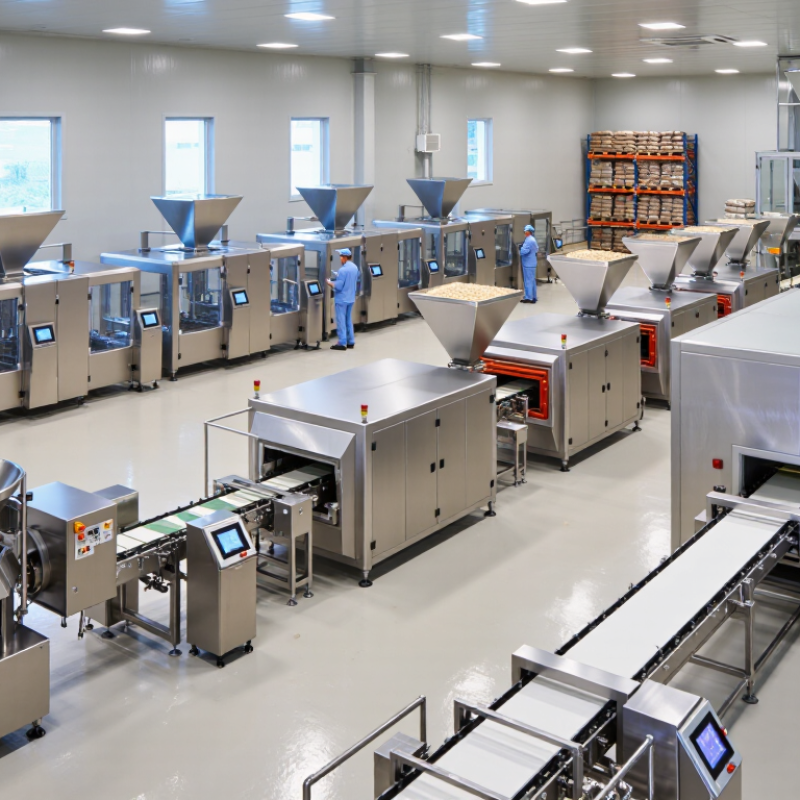
Market Scope: FEDIAF Reports 139 Million European Pet-Holding Households
Top Pet Food Processing Equipment for Global Buyers
FEDIAF reports that 139 million European households keep at least one pet, creating strong demand for consistent pet food production. This figure represents households, not individual animals, so equipment planning requires careful interpretation. For global buyers, it signals a broad market with varied feeding habits, package sizes, and product textures. A facility serving urban households may need flexible production rather than maximum volume. Regional recipes also influence grinding, mixing, cooking, and filling requirements.
In practical sourcing, raw material grinders should produce stable particle sizes without excessive heat. Accurate mixers help distribute nutrients, oils, and functional ingredients evenly. Moisture control matters. Dry diets need reliable extrusion, drying, and cooling systems. Wet products require controlled cooking, filling, and sealing equipment.
Buyers should examine stainless-steel contact surfaces, cleanability, sensor accuracy, and batch traceability. Test runs using real formulas can reveal problems that brochures often hide.
Yet equipment lists can mislead. Capacity estimates are often optimistic. A line rated for ten tons per hour may produce less after recipe changes, cleaning, or frequent package adjustments. Operators should measure actual yield, downtime, energy use, and water consumption. Smaller facilities may benefit from modular machines, although lower purchase costs can bring slower output and more manual work. FEDIAF’s household figure shows market scale, but it does not remove the need for local consumer research and cautious production forecasts.
Raw-Material Preparation: Grinding and Mixing for 10–40% Moisture Ingredients
Top Pet Food Processing Equipment for Global Buyers
Raw materials containing 10–40% moisture need careful preparation. Dry grains can fracture cleanly in a hammer mill. Wetter meat meals, vegetables, or fibers may smear and reduce screening efficiency. A grinder with adjustable speed and replaceable screens gives operators more control. The correct screen depends on particle size, moisture, fat, and fiber. In practical trials, a wider screen is not always better. It can increase heat and create uneven particles.
Tips: Measure moisture before grinding. Check it again after grinding. Use small test batches. Small trials matter. Keep feed rates steady, and watch motor load during operation. If material sticks to the chamber, reduce heat, improve airflow, or adjust the screen. These changes may help, but they should be verified with actual ingredients. A moisture meter is useful, though readings can vary between sampling points.
Mixing follows grinding, but the order of addition affects uniformity. Start with the largest dry fraction, then add smaller powders gradually. Liquid ingredients should enter through controlled spray points, not one heavy stream. Ribbon or paddle mixers can support consistent blending when fill levels stay within operating limits. Buyers should request throughput data at comparable moisture levels. Ask for cleaning access, safety features, spare-part availability, and documented test results. An acceptable blend on paper may still fail during production. Careful validation remains essential.
Thermal Processing: Extrusion at 100–180°C for Stable Dry Kibble
For global buyers, thermal processing is central to producing stable dry kibble. Extrusion commonly operates between 100 and 180°C. Heat, moisture, pressure, and mechanical shear work together inside the barrel. This combination gelatinizes starch, helps control microbial hazards, and creates a porous texture after drying. The exact target depends on the recipe, particle size, and equipment design. Small changes matter.
A reliable line needs more than a high temperature display. Operators should check feed moisture, barrel temperature, screw speed, die pressure, and residence time. I have found that uneven preconditioning often causes inconsistent cooking across the same batch. A pale center or soft piece may signal insufficient cooking, not a packaging defect. After extrusion, controlled drying lowers moisture and improves storage stability. Water activity deserves attention. It helps assess stability more accurately than moisture alone.
Equipment specifications should include accurate sensors, adjustable screw elements, cleanable surfaces, and accessible inspection points. These features support hygienic and repeatable production. Yet no machine removes the need for validation. Trial runs should compare bulk density, expansion, hardness, moisture, and microbial results. I would leave room for adjustment. Recipes change. Local climate, raw materials, and operator training can shift performance, even when settings appear identical. That uncertainty is easy to underestimate.
Drying, Coating and Cooling: Keeping Finished Kibble Below 10% Moisture
A stable dry-kibble line starts with controlled drying, not guesswork. The Merck Veterinary Manual describes dry pet food as typically containing about 8–10% moisture. That range supports shelf stability, but every formula behaves differently. High-protein recipes may release moisture unevenly. Dense pieces can look dry outside while retaining a warm, soft center.
A multi-zone dryer helps operators manage this risk. Air temperature, residence time, and exhaust humidity should be checked together. Reducing heat too quickly can trap moisture inside the kibble. Over-drying can damage texture and waste energy. It happens more often than many teams admit. Moisture readings should come from calibrated testing, with samples taken after cooling rather than directly from the dryer.
Coating adds another challenge. Liquid fat or palatant can soften the surface if applied before adequate cooling. A counterflow cooler lowers product temperature and removes residual vapor before packaging. The FEDIAF European Pet Food Industry 2024 Facts and Figures report records 139 million pet-owning households in Europe, showing the scale of quality expectations across markets. However, the 10% target is a practical process benchmark, not a universal legal limit. Buyers should verify local requirements, water activity, and storage performance. One test is not enough. Trend data matters.
Global Selection Criteria: HACCP, FDA FSMA and EU Feed Hygiene Compliance
Global buyers should evaluate pet food equipment through compliance, not capacity alone. A high-output extruder can still create serious risks if cleaning access is poor. Select stainless-steel contact surfaces, sloped frames, sealed bearings, and inspection points that reduce residue buildup. Small details matter.
HACCP requires documented hazard analysis and effective control points. Equipment should support stable temperature, pressure, moisture, and cooking-time records. Sensors need calibration, while alarms should be visible to operators. Under FDA FSMA, preventive controls also require sanitation procedures, supplier controls, monitoring, and corrective actions. The machine must fit the food safety plan, not sit beside it. Keep records accessible.
EU feed hygiene compliance places strong emphasis on hygiene, traceability, contamination prevention, and controlled production conditions. Buyers should confirm that conveyors, mixers, dryers, and packaging lines can be cleaned between recipes. Allergen changeovers need practical validation, including swab testing where appropriate. Ask suppliers for material certificates, cleaning instructions, maintenance schedules, and technical files.
In equipment reviews, teams sometimes overvalue speed and underestimate downtime caused by difficult sanitation. That is a costly mistake. Another imperfect area is operator training; even excellent equipment can fail through unclear procedures. Request factory acceptance tests, risk assessments, and sample production trials using comparable ingredients. Requirements differ by market, so qualified local regulatory review remains necessary.
Related Posts
-
The Future of Pet Food Processing Equipment Innovations Shaping the Global Market
-
How to Choose Pet Food Processing Equipment in 2026?
-

Revolutionizing the Kitchen: Essential Meat Equipment for Modern Chefs
-
Leading Global Manufacturers in Industrial Food Processing Equipment Exporting Excellence
-

2026 Top Meat Processing Equipment Trends You Should Know?
-

How to Choose the Best Meat Butcher Equipment for Your Business Needs