What Is the Best China Portable Crusher for Global Buyers?
Choosing the best Portable Crusher for global buyers is not a simple brand comparison. It is an application decision. Feed size, rock hardness, moisture, mobility, fuel use, and local service capacity all matter. A compact jaw crusher may perform well on recycled concrete, yet struggle with abrasive granite. That difference can decide project profitability.
Market research supports this growing demand. Grand View Research reports continued expansion in the global crushing, screening, and mineral processing equipment market, driven by infrastructure investment and urban redevelopment. Research and Markets also identifies mobile crushing and screening systems as a rising segment, especially where transport costs and limited site space influence equipment selection. These reports offer useful direction, but their forecasts vary. Buyers should not treat one percentage as certainty.
A practical perspective comes from Mike Woof, a long-time mining and quarrying industry editor, who has emphasized that equipment selection must reflect “the actual conditions on site.” That principle is easy to overlook. The best Portable Crusher is not always the largest, cheapest, or most automated model. It should match the material, production target, operator skills, and after-sales network. A machine working beside a dusty aggregate pile needs accessible maintenance points, clear controls, durable wear parts, and fast technical support. Small details become expensive delays.
This guide compares leading options for international buyers. It considers capacity, crushing performance, transport requirements, energy consumption, safety features, and lifecycle cost. No model wins everywhere. That is the honest part. The right choice depends on evidence, field experience, and a willingness to question impressive specifications.
What Is a Portable Crusher and Why Does China Matter?
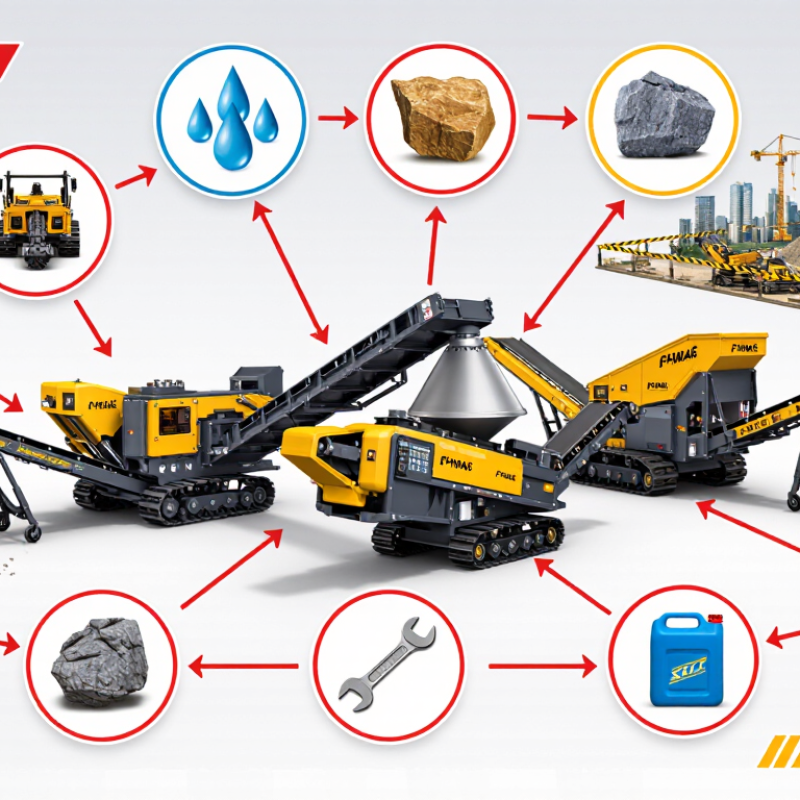
A portable crusher is a mobile machine that reduces rock, concrete, or recycled aggregate near the worksite. It usually combines a feeder, crushing chamber, conveyor, and tracked or wheeled chassis. Operators can move it between quarry benches, road projects, and construction sites with less material handling. In practical use, setup time depends on ground conditions, dust, access, and operator training. Mobility helps, but it is not magic. Soft soil can delay positioning.
China matters because its manufacturing network supports steel fabrication, electrical systems, hydraulic parts, and export logistics in one market. This can make portable crushing equipment more adaptable and cost-efficient for global buyers. Chinese factories also produce different configurations, from compact jaw units to larger impact systems. However, quality is not identical across suppliers. A low price may hide thinner wear plates, limited testing, or weak after-sales support.
Buyers should ask for documented capacity, feed-size limits, power requirements, and maintenance intervals. Requesting test videos is useful, but an on-site inspection is stronger evidence. Check weld quality, conveyor protection, emergency stops, and access to replacement parts. Confirm that the machine meets destination-country safety and emissions requirements. My experience suggests that small details matter: a poorly sealed control cabinet can fail in wet weather. Some specifications may also look impressive on paper but perform differently with hard, abrasive stone. Questions should remain open until operating data, service plans, and realistic delivery terms are verified.
Which China Portable Crusher Types Fit Different Crushing Needs?
What Is the Best China Portable Crusher for Global Buyers?
Choosing the best China portable crusher starts with the material, not the machine price. Granite, basalt, and recycled concrete demand different crushing forces. A jaw crusher suits hard, abrasive rock and primary reduction. It accepts large feed, but its output can be less uniform. That trade-off matters on road projects with strict aggregate grading. Measure the feed opening carefully.
An impact crusher fits limestone, asphalt, and softer concrete when cubical particles are important. It can produce attractive shaping, although wear rises with highly abrasive stone. For secondary or fine crushing, a cone crusher offers controlled reduction and stable gradation. It needs consistent feeding and correct settings. When the site changes often, a tracked portable crusher reduces relocation time on uneven ground. Wheeled units work well near prepared roads and fixed transfer points.
A portable jaw-and-screen line can handle a small quarry, while a compact impact-and-screen setup may suit urban recycling. Check capacity using real moisture and feed conditions, not laboratory figures alone. Ask for test reports, wear-part data, service response times, and documented noise controls. These details reveal reliability better than a brochure. Buyers often underestimate dust, oversize removal, and transport limits. The cheapest configuration may create higher operating costs. Leave room for uncertainty. Representative feed testing can expose problems before shipment.
How to Compare Capacity, Mobility, Power, and Crushing Performance
What Is the Best China Portable Crusher for Global Buyers?
The best portable crusher depends on site conditions, not catalogue claims. The U.S. Geological Survey reported about 1.5 billion metric tons of crushed stone production in the United States in 2023. That scale shows why capacity matters, but maximum output is not always practical. A 200–300 tonnes-per-hour machine may suit a large quarry, while a 50–100 tonnes-per-hour unit can be more efficient for urban recycling or smaller road projects. Check the feed opening, discharge setting, and actual output with your material.
Mobility changes operating costs. Tracked machines handle muddy ground and short relocations well. Wheeled units usually move faster between sites, but they need suitable roads and towing arrangements. Power should match the crusher type, hardness, and loading pattern. Compare engine power, fuel use per tonne, electric options, and maintenance access. UNEP’s Global Resources Outlook 2024 warns that global resource extraction could rise by 60% by 2060, increasing pressure for efficient processing. That sounds convincing, yet real fuel data still matters more than a brochure.
Ask for test results using similar stone. Measure output, dust control, noise, liner wear, and recovery time after blockages. I would not trust capacity figures without feed-size details. The comparison remains imperfect. Site visits, service response, spare-parts availability, and operator training often decide long-term value.
How to Compare Portable Crusher Configurations
This benchmark compares representative mid-range portable jaw, impact, and cone crusher configurations commonly used in global aggregate and recycling applications. Capacity depends on feed size, material hardness, moisture, and product specifications. Jaw crushers generally provide strong primary reduction, impact crushers offer high shaping performance, and cone crushers are suited to consistent secondary and tertiary production.
Values shown are representative engineering ranges consolidated from common industry specifications; actual performance varies by model, configuration, and site conditions.
What Quality, Safety, and Compliance Standards Should Buyers Check?
For global buyers, the best portable crusher is not simply the largest or cheapest option. It should match feed size, material hardness, target output, transport limits, and site conditions. Ask for documented production tests, not only catalog figures. Check the machine’s serial number, inspection record, warranty terms, and spare-parts availability. A short operating video helps. It is not proof.
Review the manufacturer’s quality system, including ISO 9001 certification and consistent inspection procedures. For safety, request a risk assessment based on ISO 12100 or relevant local standards. Check guards around belts, emergency stops, lockout points, stable access steps, and clear warning labels. Dust suppression, noise control, fire protection, and safe maintenance access also matter. Electrical parts should show suitable ratings for your country. CE marking may apply in some markets, but it is not a universal quality certificate. Confirm the exact compliance documents required at the destination. Manuals should include installation, operation, maintenance, and emergency instructions in a usable language.
Tips: Request an independent pre-shipment inspection when possible. Compare test results with your actual stone, not generic samples. Recheck assumptions after a site trial. Buyers often focus on output and overlook cleaning access or transport width. That mistake can become expensive. Also ask who handles technical support after delivery, because a compliant machine still needs reliable service.
How to Choose a Reliable Chinese Manufacturer and Control Total Costs
Choosing the best China portable crusher starts with the manufacturer, not the brochure. In field inspections, I check the factory’s machining area, welding quality, and finished equipment records. A reliable supplier should provide production photos, test reports, spare parts lists, and clear warranty terms. Ask for a video showing the crusher operating with similar rock. Real evidence matters more than polished promises.
Total cost includes much more than the quoted machine price.
Calculate freight, insurance, import duties, installation tools, electrical changes, and operator training. Confirm the crusher’s output using your actual material size and moisture level. A unit rated for 200 tons per hour may produce less with hard, wet stone. Request a complete wear-parts schedule. Jaw plates, blow bars, screens, and conveyor belts can change operating costs quickly.
Speak directly with the technical team. Their answers often reveal their experience. Check whether drawings, manuals, and remote troubleshooting are available in clear English. I once trusted a low-cost quotation and overlooked the cost of a special motor. That mistake delayed commissioning and reduced the expected savings. It was avoidable. A sensible buyer should compare lifecycle cost over three years, not only the purchase invoice. Visit an operating customer if possible, although access may be difficult. Independent inspection before shipment can also catch loose bolts, poor paint coverage, or missing components. Reliability is built through documented details, not attractive claims.