2026 Best Power Oil Transformer Types for Global Buyers
Choosing the right Power Oil Transformer in 2026 requires more than comparing rated capacity and purchase prices. Global buyers must examine grid conditions, climate, installation space, maintenance skills, and long-term operating costs. A transformer designed for a dry inland substation may perform differently in coastal humidity, desert heat, or freezing regions. The details matter.
This guide introduces common transformer types, including distribution, power, sealed-tank, conservator, and low-loss designs. It also considers mineral-oil and ester-fluid options, depending on fire-safety requirements and environmental priorities. Standards such as IEC and IEEE can support reliable evaluation, but certification alone does not guarantee suitable field performance. A buyer should verify test reports, temperature-rise data, noise levels, insulation strength, and factory quality records.
There is no universal best choice. That sounds obvious, yet many procurement decisions still rely on price tables and familiar specifications. A 40 MVA unit may look attractive until transport limits, spare parts, or cooling demands change the calculation. Small assumptions can create expensive problems. Experienced engineers should review load profiles, fault levels, altitude, ambient temperature, and expected expansion before approval. Suppliers should also explain warranty conditions, service response, oil testing procedures, and replacement-part availability. Some manufacturers provide excellent documents but limited regional support. That weakness deserves attention. This overview aims to help professional buyers compare transformer types with clearer expectations, practical evidence, and more realistic lifecycle judgments. Reliability begins before manufacturing, with questions that expose hidden risks.
Power Oil Transformers: Definition, Structure, and Core Functions
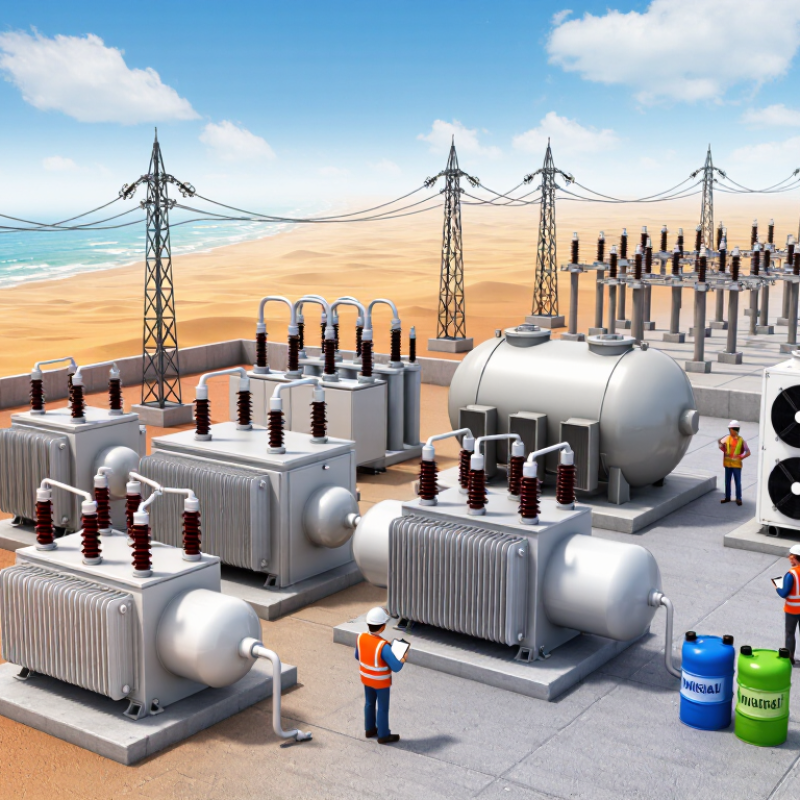
Power oil transformers transfer electrical energy between voltage levels through electromagnetic induction. They use mineral oil or ester fluid for insulation and heat removal. Inside, copper or aluminium windings surround a laminated steel core. The tank, radiators, bushings, tap changer, conservator, and protection devices complete the structure. IEC 60076 classifies these units by service, testing, and performance requirements.
The main cooling arrangements are ONAN and ONAF. ONAN uses natural oil and air circulation. ONAF adds fans for higher loading. Some large units use forced oil circulation, especially near generation plants and substations. Their core functions include voltage conversion, isolation, fault limitation, and continuous heat management. The oil also reveals ageing through dissolved-gas analysis, which helps engineers detect overheating, arcing, or insulation damage.
The IEA report Electricity Grids and Secure Energy Transitions estimates global grid investment must exceed 600 billion dollars annually by 2030. This demand increases attention on transformer efficiency and resilience. Yet, no single oil type suits every climate or installation. Ester fluids may support fire-safety goals, while mineral oil often offers wider supply availability. A careful buyer still needs altitude, humidity, loading, noise, and maintenance data. A neat specification can fail in the field. That uncomfortable detail deserves more attention.
Main Types of Power Oil Transformers for Global Applications
Main Types of Power Oil Transformers for Global Applications
Power oil transformers transfer electricity between voltage levels in generation, transmission, and distribution networks. Their designs differ by cooling method, insulation fluid, construction, and installation purpose. Oil-immersed transformers use liquid insulation around windings and the magnetic core. Mineral oil remains common because it offers strong cooling and practical cost control. Natural ester fluid suits projects that prioritize fire safety and environmental performance. Small detail, big consequence.
Cooling arrangements define how a transformer handles heat. ONAN uses natural oil and air circulation for moderate loads. ONAF adds fans when demand rises or ambient temperatures become difficult. OFAF uses pumps and fans for large substations with heavy, continuous loading. Some industrial units use oil-to-water cooling near limited-airflow facilities. Field inspections often show blocked radiators, damaged fans, or poorly monitored oil levels. These issues reduce expected performance.
Core-form transformers are widely used for grid step-up and step-down duties. Shell-form designs can provide strong short-circuit resistance in demanding industrial systems. Single-phase units fit railway supplies, remote sites, and specialized equipment. Three-phase transformers support utility substations and large commercial networks. Engineers should check load profile, altitude, humidity, seismic risk, and local grid rules. IEC 60076 and IEEE C57 provide useful technical references. A larger rating is not automatically safer. Oversizing can increase losses, transport difficulty, and operating cost. A careful specification still needs review.
Key Performance Factors: Capacity, Voltage, Efficiency, and Cooling
2026 Best Power Oil Transformer Types for Global Buyers
Capacity and voltage should match the real operating profile, not only the nameplate. A 10 MVA transformer may handle normal demand but struggle during motor starts or seasonal peaks. Check load curves, future expansion, and short-circuit levels. High-voltage systems also require suitable insulation coordination and clearances. A mismatch here can create heat, noise, and premature ageing.
Efficiency matters every hour, including during low-load periods. Compare no-load losses, load losses, impedance, and expected annual energy use. A transformer with slightly higher purchase cost may reduce long-term operating expenses. However, efficiency figures need consistent test conditions. Ask for certified test reports and verify applicable IEC or IEEE requirements. Cooling selection is equally practical. ONAN suits many moderate installations, while forced-oil or forced-air cooling supports heavier continuous loads. Ambient temperature and altitude can change the result.
Tips: Leave realistic capacity headroom. Do not oversize without analysis, because light-load losses continue all day. Inspect oil temperature, winding temperature, seals, and radiators during commissioning. Remote monitoring can reveal abnormal heating early. Field conditions are rarely perfect. Dust, poor ventilation, and unstable loads may defeat a technically sound design. Recheck assumptions with local engineers before ordering.
2026 Best Power Oil Transformer Types for Global Buyers - Key Performance Factors: Capacity, Voltage, Efficiency, and Cooling
| Transformer Type | Typical Capacity Range | Typical Voltage Class | Typical Full-Load Efficiency | Common Cooling Method | Typical Global Applications |
| Oil-Immersed Distribution Transformer | 25–2,500 kVA | Up to 36 kV | 98.0%–99.5% | ONAN | Utility distribution networks, commercial buildings, rural electrification, and industrial loads. |
| Medium Power Oil Transformer | 2.5–20 MVA | 11–69 kV | 98.5%–99.7% | ONAN or ONAF | Substations, renewable-energy collection systems, manufacturing plants, and infrastructure projects. |
| Large Power Transformer | 20–200 MVA | 69–245 kV | 99.0%–99.8% | ONAF or OFAF | Transmission substations, major industrial facilities, power plants, and grid interconnections. |
| Extra-High-Voltage Power Transformer | 200–1,000 MVA | 245–800 kV | 99.5%–99.85% | OFAF or OFWF | Bulk-power transmission, interregional grids, large generation plants, and high-voltage interconnections. |
| Generator Step-Up Transformer | 10–1,000 MVA | Generator voltage to 765 kV | 99.0%–99.85% | ONAF, OFAF, or OFWF | Hydroelectric, thermal, nuclear, wind, and utility-scale solar power stations. |
| Renewable-Energy Collector Transformer | 1–100 MVA | 0.4–36 kV on the collection side | 98.5%–99.7% | ONAN or ONAF | Solar farms, wind farms, battery-storage facilities, and distributed-generation projects. |
| Furnace or Special-Application Oil Transformer | 1–100 MVA | Up to 69 kV | 97.5%–99.5% | ONAN, ONAF, or OFAF | Steel mills, electrochemical plants, traction systems, test facilities, and high-cyclic industrial loads. |
Technical note: ONAN means Oil Natural Air Natural; ONAF means Oil Natural Air Forced; OFAF means Oil Forced Air Forced; and OFWF means Oil Forced Water Forced. Capacity, voltage, and efficiency figures are representative engineering ranges. Final ratings should be selected according to the applicable IEC 60076, IEEE C57, or equivalent national standard, including ambient temperature, altitude, load profile, impedance, losses, and insulation requirements.
How to Select the Right Oil Transformer for Different Power Systems
Selecting the right oil transformer starts with the power system, not the nameplate alone. Confirm primary and secondary voltages, frequency, phase arrangement, and expected load growth. A 33 kV network may require different insulation coordination than a 11 kV industrial feeder. Details matter.
Review the load profile before choosing the rated capacity. Motors, furnaces, and renewable sources can create sharp inrush or harmonic currents. A transformer with suitable impedance can limit fault current, but excessive impedance may cause poor voltage regulation.
Cooling also deserves practical attention. ONAN cooling may suit a rural substation, while ONAF cooling can support dense urban loads. Ambient temperature, altitude, enclosure ventilation, and installation space affect real performance. Do not guess.
Field inspections often show that moisture control is overlooked. Specify a sealed tank or conservator arrangement according to the maintenance plan and climate. Check oil preservation, breather access, thermometer range, pressure relief devices, and online monitoring needs. For coastal or dusty sites, corrosion protection and reliable bushings become important. Grid codes and recognized testing standards should guide factory acceptance tests, including ratio, winding resistance, insulation, and oil quality checks. A common mistake is selecting only by purchase price. Lower initial cost may bring higher losses, difficult servicing, or limited spare-part availability. The imperfect choice is sometimes the cheapest one that seemed reasonable on paper. Recheck it against twenty-year operating conditions.
International Standards, Safety Requirements, and Maintenance Practices
For global buyers, oil-immersed power transformers should meet recognized standards before price becomes the deciding factor. IEC 60076 and IEEE C57 guidance cover design, testing, insulation, and performance. Local grid codes still matter. A compliant unit in one country may need additional testing elsewhere. Request routine and type-test reports, factory inspection records, and traceable material certificates. Clear documentation reflects professional manufacturing control.
Safety begins with installation planning. Confirm grounding, clearances, fire separation, pressure-relief operation, and oil containment. Inspect bushings, conservators, radiators, valves, and cable connections before energizing. During operation, check oil temperature, load current, unusual noise, and visible leakage. Dissolved gas analysis can reveal overheating or insulation faults early. Oil breakdown-voltage and moisture tests add useful evidence. However, test results need qualified interpretation. Numbers alone can mislead.
Tips: Build a maintenance schedule around operating conditions, not only calendar dates. Record thermographic images under normal load. Compare each result with earlier readings. Keep spare gaskets and calibrated instruments available. Train technicians in electrical isolation and emergency response. A perfect checklist does not exist. Dust, humidity, and rushed inspections can defeat good procedures. Review weak points after every service visit, even when the transformer appears healthy.
2026 Best Power Oil Transformer Types for Global Buyers
International standards, safety requirements, and maintenance practices
The chart shows representative continuous capacity bands commonly associated with oil-immersed cooling arrangements. Actual ratings depend on voltage class, ambient temperature, altitude, load profile, impedance, short-circuit requirements, and the applicable project specification. ONAN is often selected for simple and efficient distribution or substation duty, while ONAF, OFAF, and ODWF support higher power density through enhanced oil and air or water cooling.
International Standards
IEC 60076 covers power-transformer design, testing, temperature rise, loading, and insulation requirements. IEEE C57 standards provide complementary guidance for North American applications, including testing, loading, and dissolved-gas analysis.
Safety Requirements
Specify pressure-relief protection, oil-level and temperature alarms, electrical interlocking, suitable fire protection, bunding or oil containment, safe clearances, and verified earthing. Inspection and repair work must follow an approved isolation, lockout, and grounding procedure.
Maintenance Practices
Use routine visual checks, leak and bushing inspections, temperature and load trending, thermography, oil quality testing, and dissolved-gas analysis. Intervals should be risk-based and aligned with IEC 60422, IEC 60599, IEEE C57.104, the manufacturer’s instructions, and local regulations.